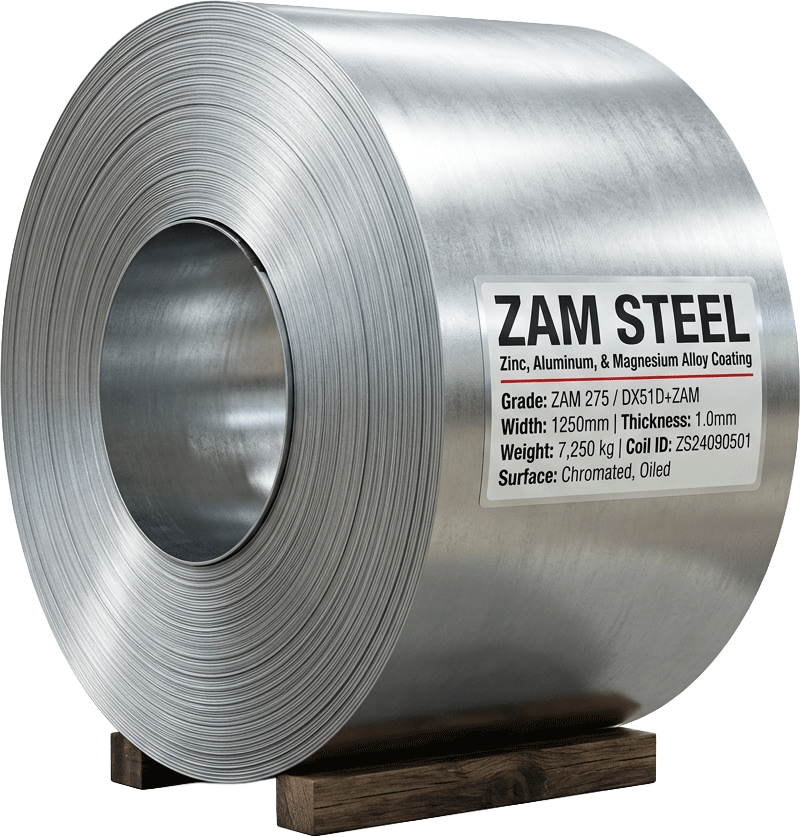
ZAM zinc aluminium magnesium steel coil Pakistan - Raw Easy Corp

ZAM Steel Coil Supplier in Pakistan — Zinc-Aluminium-Magnesium

ZAM coil steel is widely used in solar mounts, agricultural greenhouses, and coastal infrastructure. Key specifications feature zinc aluminum magnesium coatings alongside thicknesses reaching six millimeters, ensuring excellent corrosion resistance.

Sizes Available:

1219

  • 1.0 mm
  • 1.2 mm
  • 1.5 mm
  • 2.0 mm

ZAM (Zinc-Aluminium-Magnesium) coated coil offers significantly higher corrosion resistance than standard GP, making it a preferred choice for coastal, industrial, and long-life roofing projects. Raw Easy Corp is among the leading importers of ZAM steel coil in Pakistan, offering full technical guidance and daily pricing to help buyers specify the right coating for their environment.

Specifications

AttributeRange / Standard
ProductZinc-aluminium-magnesium (ZM) coated steel coil
Thickness1.0 mm, 1.2 mm, 1.5 mm, 2.0 mm
Width1219 mm
Coating typeZinc with aluminium and magnesium additions
StandardsASTM A1046/A1046M; JIS G3323
Typical usesSolar mounting, greenhouse frames, coastal and industrial structures
PCT heading72.10 — zinc-predominant coatings classify under 7210.49

What it is and how it is specified

ZM coatings add aluminium and magnesium to the zinc bath. The magnesium forms a more stable corrosion product, and the coating gives a degree of cut-edge protection that plain galvanized does not, which is why it is specified for solar mounting structures and coastal work.

ZM is not the same product as Galvalume. Galvalume is aluminium-predominant at roughly 55% aluminium; ZM remains zinc-predominant. That distinction decides the tariff heading and therefore the duty exposure, so it is worth getting right on the paperwork before the goods sail.

Duty and origin

Because ZM is zinc-predominant it classifies under a different tariff heading from Galvalume, and a different trade-remedy instrument applies. Confirm classification and origin before you commit — our Galvalume duty guide explains how the two measures differ and why the predominance test matters at clearance.